
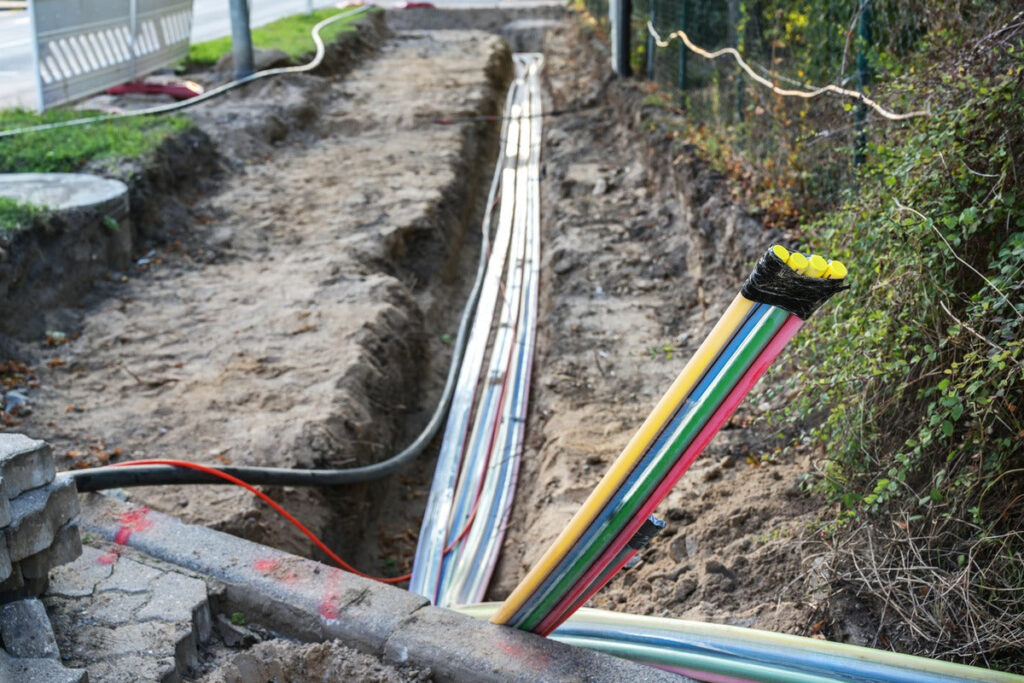
The Federal Government on Tuesday said it will, within weeks, commence the rollout of a 90,000-kilometre fibre optic network nationwide. It described the move as one of the country’s most ambitious digital infrastructure projects aimed at transforming broadband connectivity.
Minister of Communications, Innovation and Digital Economy, Dr Bosun Tijani, disclosed this on Tuesday after briefing President Bola Tinubu at the State House, Abuja, on the progress of three flagship digital transformation projects being implemented by his ministry.
Tijani said the government had completed the resource mobilisation and contractual processes required for the fibre project and was ready to begin deployment across the country.
“We’re now at the point where, in a few weeks’ time, we should start to lay those fibres, so people will start seeing us around the country deploying the fibre. This is going to transform Nigeria for good,” the minister said.
He explained that the project would extend fibre optic infrastructure to every state, geopolitical zone, local government area and ward, significantly improving the quality and reach of internet connectivity.
The minister added, “This is a project where every state, every geopolitical zone, every local government and every ward in this country will be covered with fibre optic cables, which will transform the quality of connectivity.”
He said he also used the meeting to thank President Tinubu for policy reforms that have strengthened the communications sector, including the designation of digital infrastructure as Critical National Infrastructure, tariff adjustments and tax harmonisation.
Tijani explained, “I think our sector has been extremely fortunate. With Mr President, as you can imagine, he’s given us quite a number of things that the sector has been demanding for a long time.
“Whether it’s the Critical National Infrastructure designation for all digital infrastructure, or the slight adjustment in tariff, which you’ve seen, the tax harmonisation, which the sector has been asking for.
“I think it’s probably the sector that is most appreciative of this government because when we came in, the sector was contributing between 16 and 18 per cent to our GDP, but today that sector is tracking close to 21 per cent. So it’s a significant growth,” he added, noting that major players in the sector had also recorded strong financial performances since the reforms were introduced.
On rural connectivity, the minister disclosed that the government would begin deploying about 3,700 telecommunications towers from October to provide network coverage for more than 20 million Nigerians currently living in communities without access to telecommunications services.